


The engineering industry in India is evolving rapidly with the growth of sectors such as oil & gas, power plants, petrochemicals, pharmaceuticals, water treatment, renewable energy, and infrastructure development. As industries continue to expand, the demand for skilled mechanical engineers with specialized technical knowledge has increased significantly.
While a mechanical engineering degree provides a strong academic foundation, employers today look for professionals who possess practical industry skills that can be applied immediately in real-world projects.
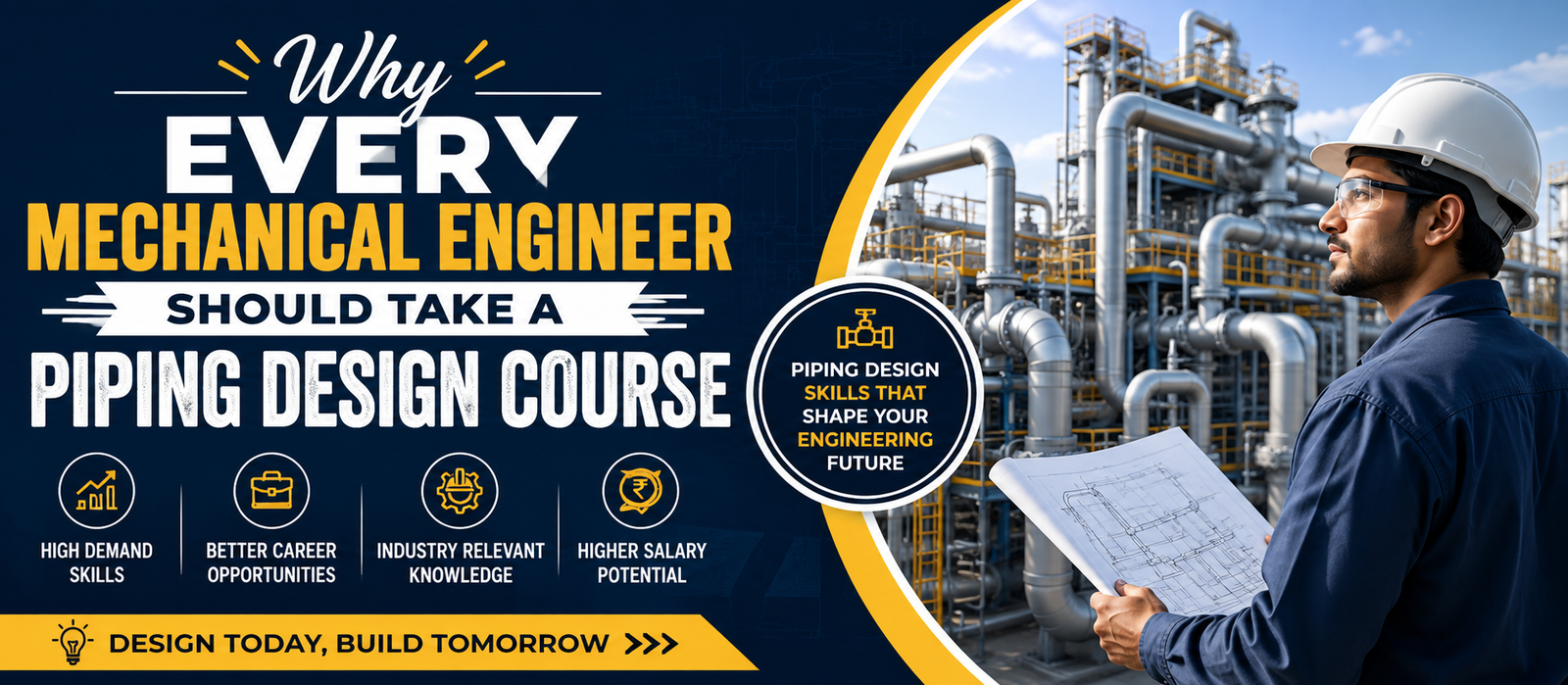
One of the most valuable ways to gain this expertise is by enrolling in a Piping Design Course. This specialized training equips mechanical engineers with the knowledge, software skills, and industrial practices required to design safe, efficient, and cost-effective piping systems.
A comprehensive Piping Engineering Course bridges the gap between classroom education and industry expectations, helping engineers build successful careers in India’s rapidly growing industrial sector.
Understanding the Importance of Piping Design in Modern Industries
Piping systems are considered the backbone of every processing industry. They are responsible for transporting liquids, gases, steam, chemicals, and various industrial fluids safely between different equipment. A poorly designed piping system can result in operational failures, safety hazards, increased maintenance costs, and production losses.
Mechanical engineers who understand piping design become valuable assets because they contribute to the planning, design, installation, operation, and maintenance of industrial facilities. Their expertise helps organizations improve plant efficiency while ensuring compliance with national and international engineering standards.
Why Mechanical Engineers Need Specialized Skills Beyond Their Degree
Although mechanical engineering covers subjects such as thermodynamics, fluid mechanics, machine design, manufacturing processes, and strength of materials, it often provides limited exposure to industrial piping systems. This creates a noticeable gap between academic learning and practical engineering applications.
A professional Piping Design Course focuses on real industrial workflows, engineering documentation, piping layouts, equipment connections, piping materials, stress considerations, and engineering standards. These practical skills make engineers more confident and industry-ready from the very beginning of their careers.
Growing Demand for Piping Engineers in India
India has become one of the fastest-growing industrial economies in the world. Large-scale investments in refineries, LNG terminals, chemical plants, fertilizer projects, renewable energy facilities, pharmaceutical manufacturing, and infrastructure development continue to generate employment opportunities for qualified piping professionals.
Engineering companies, EPC contractors, manufacturing industries, and consulting organizations actively seek candidates who possess practical knowledge gained through a Piping Engineering Course. Since piping engineering is essential in almost every industrial project, qualified professionals enjoy diverse career opportunities across multiple sectors.
Learn Industry-Oriented Design Methodologies
Industrial projects require engineers to follow systematic engineering procedures from concept design to project execution. A professional Piping Design Course introduces learners to complete project workflows used by engineering companies.
Students gain practical exposure to piping layout development, equipment modeling, pipeline routing, material specifications, isometric drawings, piping support concepts, and engineering documentation. This industry-oriented approach enables engineers to understand how actual industrial projects are planned and executed.
Master Industry-Standard Engineering Software
Modern engineering companies rely heavily on specialized software for designing complex industrial plants. Manual drafting has largely been replaced by advanced digital design platforms that improve accuracy, efficiency, and collaboration.
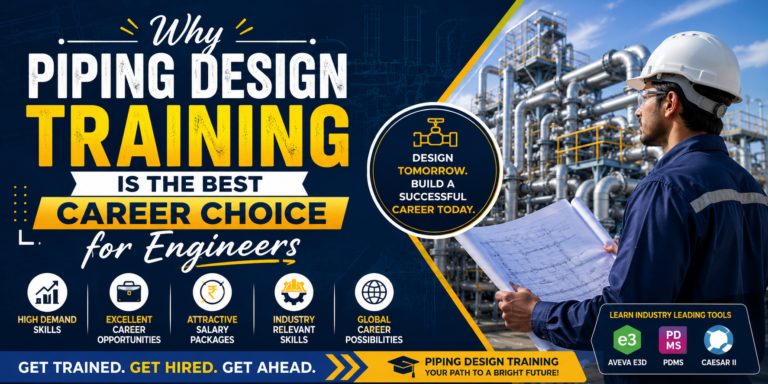
A quality Piping Engineering Course provides hands-on training in widely used engineering software such as AVEVA E3D, PDMS, SmartPlant 3D (SP3D), AutoCAD Plant 3D, and CAESAR II. Learning these technologies enhances technical capabilities and prepares engineers for modern engineering environments where digital plant design is the industry standard.
Build Practical Engineering Knowledge
Employers consistently prefer candidates who possess practical knowledge rather than only theoretical understanding. Industrial training helps mechanical engineers develop confidence in handling actual engineering challenges.
During a Piping Design Course, learners work on practical projects that simulate real industrial conditions. They understand piping drawings, process flow diagrams, piping and instrumentation diagrams, equipment layouts, material selection, valve specifications, and engineering calculations. This practical exposure significantly improves problem-solving skills and technical decision-making.
Improve Career Opportunities Across Multiple Industries
One of the biggest advantages of learning piping engineering is the wide range of industries that require these skills. Mechanical engineers with piping expertise are not limited to a single sector.
They can explore opportunities in oil and gas industries, petrochemical plants, chemical manufacturing, pharmaceutical industries, thermal power plants, nuclear facilities, food processing units, water treatment plants, offshore engineering projects, renewable energy plants, and infrastructure development projects. This versatility increases long-term career stability and professional growth.
Develop Knowledge of International Engineering Standards
Industrial projects demand strict compliance with engineering codes and standards to ensure safety, quality, and operational reliability. Understanding these standards is an essential requirement for every piping engineer.
A professional Piping Engineering Course introduces learners to internationally recognized engineering practices, piping codes, material standards, design principles, and quality control procedures. Familiarity with these standards allows engineers to contribute effectively to both domestic and international engineering projects.
Gain Better Understanding of Industrial Project Execution
Engineering projects involve multiple disciplines working together throughout different project phases. Mechanical engineers must understand how piping interacts with civil, structural, electrical, instrumentation, and process engineering teams.
A comprehensive Piping Design Course explains project coordination, engineering documentation, design reviews, construction support, procurement processes, and commissioning activities. This broader understanding helps engineers communicate effectively within multidisciplinary project teams.
Enhance Professional Confidence
Technical confidence comes from practical knowledge and real project exposure. Engineers who understand industrial design processes can participate more effectively in technical discussions, design reviews, and project meetings.
Completing a Piping Design Course enables professionals to analyze engineering problems, interpret complex drawings, prepare design documents, and contribute confidently to engineering projects. This confidence becomes a major advantage during interviews and throughout professional careers.
Prepare for Global Engineering Opportunities
Indian engineering professionals are highly respected worldwide for their technical skills. Many multinational companies recruit piping engineers for projects across the Middle East, Southeast Asia, Europe, Australia, and other international markets.
Since piping engineering principles remain largely consistent across global industries, completing a recognized Piping Engineering Course enhances international employability. Engineers become better prepared to work on large-scale global engineering projects that follow international standards and best practices.
Continuous Learning for Long-Term Career Growth
Technology continues to transform engineering industries through automation, digital plant design, Building Information Modeling (BIM), cloud collaboration, and smart manufacturing. Engineers who continuously upgrade their skills remain competitive throughout their careers.
A Piping Design Course serves as a strong foundation for advanced learning in plant design, pipe stress analysis, equipment engineering, structural coordination, and project management. Continuous professional development helps engineers adapt to changing industry requirements and achieve long-term career success.
Conclusion
Mechanical engineering graduates possess strong technical fundamentals, but today’s competitive industrial environment demands specialized practical expertise. A professional Piping Design Course provides the industry-focused knowledge, software proficiency, engineering standards, and practical exposure needed to excel in India’s rapidly expanding industrial sector.
Whether you are a fresh graduate looking to build a strong career or an experienced engineer aiming to enhance your technical skills, investing time in a comprehensive Piping Engineering Course can significantly improve your career prospects, professional confidence, and long-term growth.
If you are looking for industry-oriented training designed to meet modern engineering requirements, onlinepiping.com offers comprehensive learning resources that help mechanical engineers develop practical piping design skills and prepare for successful careers in India’s engineering industry.