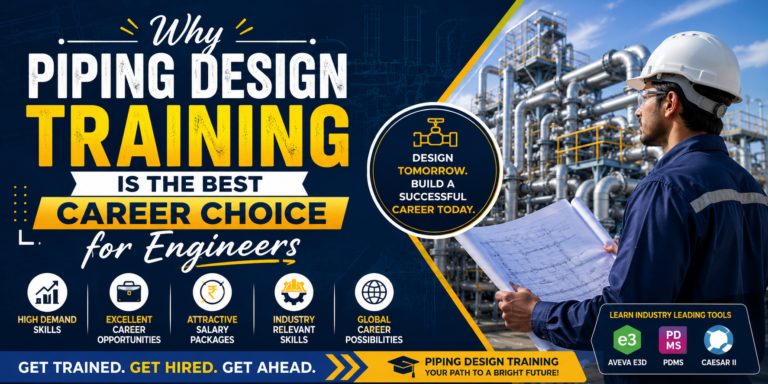




The demand for skilled piping professionals has increased significantly over the last decade. Industries such as oil & gas, petrochemicals, power plants, pharmaceuticals, water treatment, and chemical processing rely heavily on well-designed piping systems to ensure safe and efficient operations. As these industries continue to expand worldwide, companies are actively seeking trained piping designers who possess both technical knowledge and practical software skills.
This is where Piping Design Training becomes an essential step toward a rewarding engineering career. Whether you are a mechanical engineering student, diploma holder, graduate engineer, or working professional looking to upgrade your skills, professional piping design training can open doors to high-paying opportunities across the globe.
In this comprehensive guide, you’ll learn what piping design is, why training is important, the skills you’ll gain, career opportunities, software covered, and how specialized programs such as an AutoCAD Piping Course and an Instrumentation Design Course complement your learning journey.
What is Piping Design?
Piping design is the engineering discipline that focuses on planning, designing, routing, and documenting piping systems used to transport liquids, gases, chemicals, steam, and other process fluids safely and efficiently.
A piping designer creates layouts that ensure:
- Safe transportation of fluids
- Proper equipment connectivity
- Easy maintenance and inspection
- Compliance with international engineering standards
- Cost-effective installation
- Reliable plant operation
Piping systems form the backbone of industrial plants, making piping designers an indispensable part of every engineering project.
Why is Piping Design Training Important?
Many engineering graduates possess theoretical knowledge but lack practical industry skills. Companies generally prefer professionals who understand real project workflows and industry-standard software.
Professional Piping Design Training bridges this gap by providing practical exposure to:
- Industrial piping systems
- Plant layout concepts
- Equipment arrangement
- Piping routing
- Isometric drawings
- General arrangement drawings
- Pipe supports
- Material specifications
- Engineering standards
- 3D plant modeling
Instead of only learning theory, students gain hands-on experience similar to actual engineering projects.
Who Should Join Piping Design Training?
This training is suitable for:
- Mechanical Engineers
- Chemical Engineers
- Production Engineers
- Diploma Engineers
- Industrial Engineers
- Plant Maintenance Engineers
- Fresh Engineering Graduates
- Working Professionals
- CAD Designers
- Design Engineers
Even professionals from fabrication or maintenance backgrounds can transition into piping design with proper training.
Skills You Learn During Piping Design Training
A comprehensive training program usually covers multiple technical areas.
Engineering Fundamentals
Students learn:
- Fluid transportation systems
- Industrial process plants
- Pipe sizing basics
- Material selection
- Valves and fittings
- Pumps
- Compressors
- Heat exchangers
- Pressure vessels
- Storage tanks
Piping Components
Training includes detailed knowledge of:
- Pipes
- Elbows
- Reducers
- Tees
- Flanges
- Gaskets
- Valves
- Strainers
- Pipe supports
- Expansion joints
Understanding these components helps designers create efficient and reliable piping systems.
Plant Layout
Students learn how to:
- Position equipment
- Plan process units
- Maintain safety distances
- Design maintenance access
- Optimize space utilization
Plant layout is one of the most important aspects of industrial engineering projects.
Piping Routing
Routing involves determining the safest and most efficient path for pipes while considering:
- Structural interference
- Maintenance accessibility
- Thermal expansion
- Safety regulations
- Equipment connections
- Pipe stress considerations
Good routing minimizes construction costs and improves plant reliability.
Software Covered in Piping Design Training
Modern engineering companies use various design software applications.
Training programs commonly include:
- AutoCAD
- AVEVA E3D
- SP3D
- PDMS
- AutoCAD Plant 3D
- Navisworks
- CAESAR II (Basics)
Hands-on software practice prepares students for real-world engineering environments.
Why an AutoCAD Piping Course is Essential
One of the core modules included in professional piping education is the AutoCAD Piping Course.
AutoCAD remains one of the most widely used CAD software platforms for creating engineering drawings.
During an AutoCAD Piping Course, students learn to create:
- Piping layouts
- Equipment layouts
- Isometric drawings
- Orthographic drawings
- Plot plans
- Pipe support drawings
- Fabrication drawings
- General Arrangement (GA) drawings
- Section views
- Bill of Materials (BOM)
Mastering AutoCAD significantly improves drafting speed, drawing accuracy, and overall productivity, making it an essential skill for aspiring piping designers.
Importance of an Instrumentation Design Course
Industrial plants depend not only on piping but also on sophisticated instrumentation systems for monitoring and controlling processes.
An Instrumentation Design Course complements piping training by teaching students about:
- Process instrumentation
- Pressure transmitters
- Temperature instruments
- Flow measurement devices
- Control valves
- Instrument installation
- Cable routing
- Hook-up drawings
- Instrument Index
- Loop diagrams
- P&ID interpretation
- PLC and DCS basics
Learning instrumentation design alongside piping design enhances your understanding of complete plant engineering systems and increases your employability.
Engineering Standards Covered
Quality training introduces students to internationally recognized standards such as:
- ASME
- ANSI
- API
- ASTM
- MSS
- ISO
- BS
- DIN
Understanding these standards is essential for designing systems that meet industry requirements and safety regulations.
Practical Project Experience
The best Piping Design Training programs emphasize project-based learning.
Students typically work on:
- Oil refinery projects
- Chemical plants
- Petrochemical facilities
- LNG terminals
- Power plants
- Water treatment plants
- Pharmaceutical industries
Working on simulated industrial projects builds confidence and prepares students for professional engineering roles.
Career Opportunities After Piping Design Training
Qualified piping designers can work in a variety of industries.
Popular job roles include:
- Piping Designer
- Piping Engineer
- CAD Designer
- Plant Design Engineer
- Mechanical Design Engineer
- Layout Engineer
- Project Engineer
- Design Coordinator
- Stress Engineer (with additional specialization)
- Plant Engineering Consultant
These positions are available in engineering consulting firms, EPC companies, manufacturing industries, oil & gas companies, and infrastructure projects.
Industries Hiring Piping Designers
Professionals trained in piping design are employed across multiple sectors, including:
- Oil & Gas
- Petrochemical
- Chemical Processing
- Power Generation
- Pharmaceutical Manufacturing
- Food Processing
- Water Treatment
- Offshore Engineering
- LNG Plants
- Renewable Energy
- Fertilizer Plants
- Refineries
The broad industry demand ensures strong career prospects both domestically and internationally.
Benefits of Professional Piping Design Training
Enrolling in a structured training program offers several advantages:
- Industry-oriented curriculum
- Practical software training
- Real project exposure
- Improved technical knowledge
- Better drafting skills
- Increased job opportunities
- Higher salary potential
- Enhanced confidence during interviews
- Global career opportunities
- Strong foundation for advanced engineering roles
How to Choose the Right Training Institute
Before enrolling, consider the following factors:
- Updated industry syllabus
- Experienced trainers
- Hands-on software practice
- Live project training
- Placement assistance
- Flexible learning options
- Course certification
- Positive student reviews
- Comprehensive study materials
- Technical support
Choosing the right institute can significantly impact your career growth and job readiness.
Future Scope of Piping Design
The future of piping design remains highly promising as industries continue investing in new infrastructure, energy projects, and industrial modernization.
Emerging technologies such as:
- 3D plant modeling
- Building Information Modeling (BIM)
- Digital twins
- Cloud collaboration
- Artificial Intelligence
- Automation
- Smart manufacturing
are transforming engineering workflows. Professionals with modern piping design skills and software expertise will continue to be in high demand.
Conclusion
Investing in Piping Design Training is one of the smartest career decisions for engineering students and professionals aiming to enter the industrial design sector. A well-structured training program equips learners with practical engineering knowledge, software proficiency, and project experience required by today’s employers. Combining specialized learning through an AutoCAD Piping Course and an Instrumentation Design Course further strengthens your technical expertise and broadens your career opportunities across industries such as oil & gas, petrochemicals, power, pharmaceuticals, and manufacturing.
If you’re looking to build a successful career in plant design engineering, explore quality learning resources, industry-focused courses, and technical guidance at onlinepiping.com to take the next step toward becoming a skilled piping design professional.