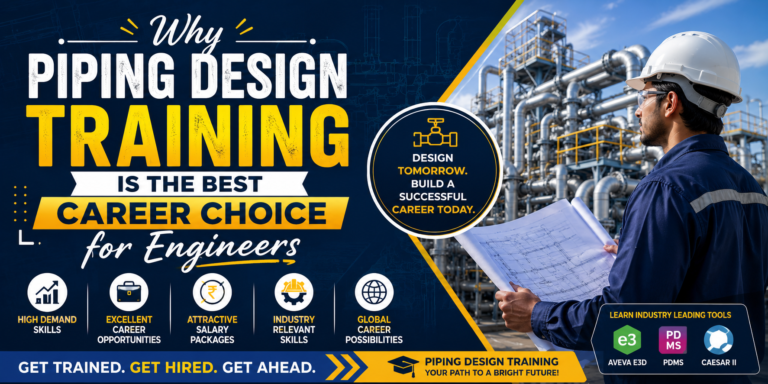






The engineering industry offers numerous career opportunities for individuals interested in technical design, industrial infrastructure, and engineering systems. Among these fields, piping design and engineering play an essential role in industries such as oil and gas, petrochemicals, power plants, refineries, pharmaceuticals, and manufacturing. As industrial projects continue to expand, the demand for skilled professionals with specialized technical knowledge is also increasing.
For aspiring engineering professionals, enrolling in a professional Piping Course can be an excellent step toward developing the knowledge and practical skills required to enter this industry. From understanding piping layouts to learning engineering software and technical documentation, proper training helps individuals build a strong foundation for a successful career.
Understanding Piping Engineering and Its Importance
Piping Engineering is a specialized engineering discipline concerned with designing, planning, installing, and maintaining piping systems used to transport liquids, gases, chemicals, steam, and other industrial materials.
These systems are essential in industries where the safe and efficient transportation of fluids is critical. Piping engineers work on different aspects of industrial projects, including equipment connections, pipeline routing, material selection, stress considerations, and technical drawings.
A well-designed piping system must meet safety requirements, operational needs, industry standards, and project specifications. This makes piping engineering an important part of industrial infrastructure development.
Why Choose a Career as a Piping Engineer?
Choosing a career as a Piping Engineer can provide opportunities to work on large-scale industrial projects and develop specialized technical expertise. Professionals in this field collaborate with mechanical engineers, civil engineers, structural designers, process engineers, and project management teams.
Some important reasons to consider this career include:
- Growing Industrial Applications: Piping systems are required in refineries, chemical plants, power stations, and manufacturing facilities.
- Specialized Technical Skills: Professionals develop expertise in piping layouts, engineering drawings, equipment arrangements, and design software.
- International Career Opportunities: Industrial engineering projects across different countries create opportunities for qualified piping professionals.
- Career Development: With experience, professionals can progress into senior design, engineering coordination, and project management roles.
- Practical Engineering Knowledge: The profession combines technical understanding with real-world industrial applications.
What Will You Learn in a Professional Piping Design Course?
A structured Piping Design Course helps students understand the technical principles and practical requirements of industrial piping systems. It is particularly useful for mechanical engineers, diploma holders, engineering graduates, and individuals interested in entering the industrial design sector.
A comprehensive training program generally covers the following topics:
1. Fundamentals of Piping Engineering
Students learn the basic concepts of industrial piping systems, different types of pipes, fittings, valves, flanges, and other piping components. They also understand how piping systems function in industrial environments.
2. Piping Materials and Components
Understanding material selection is important for designing safe and reliable piping systems. Training may include carbon steel, stainless steel, alloy steel, pipe fittings, gaskets, supports, and different valve types.
3. Piping Layout and Design
Piping layout is one of the most important areas of piping engineering. Students learn how to plan pipeline routes, position equipment, maintain accessibility, and develop efficient piping arrangements.
4. Isometric Drawings
Piping isometric drawings provide detailed information about pipeline routing, dimensions, fittings, elevations, and connections. Learning to read and prepare these drawings is an essential skill for piping design professionals.
5. Piping Design Software
Modern engineering projects use specialized software to develop accurate piping layouts and 3D models. Depending on the training program, students may learn tools such as:
- AutoCAD
- AVEVA E3D
- AutoCAD Plant 3D
- SP3D (Smart 3D)
- CAESAR II
Practical exposure to relevant software helps students understand how engineering drawings and models are developed for industrial projects.
6. Piping Standards and Codes
Piping professionals must understand relevant industry standards and codes. Training may introduce students to ASME, ANSI, ASTM, and other applicable engineering standards used in industrial piping projects.
Essential Skills Required to Become a Piping Engineer
Building a successful career requires more than completing a training program. A professional must develop technical knowledge, analytical thinking, communication abilities, and practical problem-solving skills.
Some essential skills include:
- Technical Drawing Interpretation: Ability to understand piping layouts, isometric drawings, and engineering documentation.
- CAD Software Knowledge: Familiarity with design and drafting applications used in industrial projects.
- Material Knowledge: Understanding different piping materials, fittings, valves, and their applications.
- Problem-Solving Skills: Ability to identify design challenges and develop practical solutions.
- Engineering Standards: Knowledge of relevant codes, specifications, and safety requirements.
- Team Collaboration: Ability to coordinate with multidisciplinary engineering teams.
Developing these skills through practical training and project-based learning can improve career readiness.
Career Opportunities After Completing a Piping Engineering Course
After completing a professional Piping Engineering Course, individuals can explore various opportunities depending on their qualifications, software knowledge, practical experience, and technical abilities.
Some potential job roles include:
- Piping Design Engineer: Responsible for developing piping layouts, equipment arrangements, and engineering design documents.
- Piping Designer: Works on industrial piping layouts, 3D models, and technical drawings.
- Piping Draftsman: Prepares and modifies engineering drawings according to project requirements.
- Piping Stress Engineer: Evaluates piping systems for thermal expansion, pressure loads, and other mechanical stresses.
- Piping Material Engineer: Handles material specifications, component selection, and piping material documentation.
- Piping Site Engineer: Coordinates piping installation activities and ensures work follows approved engineering drawings and specifications.
Career opportunities are available across oil and gas, petrochemical, power generation, pharmaceutical, and industrial construction sectors.
How to Choose the Right Piping Course?
Selecting the right training program is an important decision for anyone planning to enter the piping design industry. Not every course provides the same level of technical knowledge or practical exposure.
Before enrolling, consider the following factors:
- Comprehensive Curriculum: Choose a program covering piping fundamentals, layouts, isometric drawings, and relevant engineering standards.
- Practical Software Training: Look for courses offering hands-on experience with industry-relevant design applications.
- Experienced Trainers: Professional guidance can help students understand real-world engineering practices.
- Industry-Oriented Projects: Practical assignments and project exercises can improve technical confidence.
- Career Guidance: Training that includes interview preparation, resume guidance, and career support can be beneficial.
A suitable course should balance theoretical concepts with practical applications so students can understand how piping systems are designed and developed in actual industrial projects.
Who Can Enroll in a Piping Course?
A Piping Course can be suitable for individuals from different educational and professional backgrounds, depending on the course eligibility criteria.
Common candidates include:
- Mechanical engineering graduates.
- Diploma holders in mechanical engineering.
- Fresh engineering graduates interested in industrial design.
- Working professionals looking to upgrade their technical skills.
- CAD designers interested in specializing in piping design.
- Individuals planning to develop a career in oil and gas or related industries.
Students should check the eligibility requirements and course curriculum before selecting a training institute.
Future Scope of Piping Design and Engineering
The future of piping engineering is closely connected to industrial development, energy infrastructure, chemical processing, and manufacturing. As companies continue investing in industrial facilities and infrastructure projects, the need for accurate engineering design and reliable piping systems remains important.
Modern design technologies are also transforming the industry. Advanced 3D modelling, digital project coordination, automated design workflows, and improved engineering software are helping professionals develop more efficient piping systems.
For aspiring professionals, developing strong fundamentals alongside modern software skills can help create long-term career opportunities.
Conclusion
Building a successful career in piping design and engineering requires technical knowledge, practical training, software proficiency, and a clear understanding of industrial requirements. Enrolling in a professional Piping Course can help aspiring engineers develop the essential skills needed to explore opportunities in the oil and gas, petrochemical, power generation, and manufacturing industries.
Whether you are a fresh engineering graduate or an experienced professional looking to enhance your technical expertise, choosing the right training program can make a meaningful difference in your career journey. To explore professional training and develop industry-relevant piping design skills, visit Kagira Drawing Solution (kagiradrawingsolution.com) and learn more about the opportunities available in piping engineering and design.